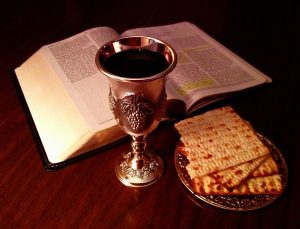
 Because of the Watchtower teaching that only the anointed 144,000 are in the new covenant, at their annual Memorial service (their version of communion) only those who profess to be in this special class are allowed to partake of the bread and wine. Others are encouraged to attend, but they are required to pass the bread and wine by. This includes all Jehovah’s Witnesses who are in the great crowd, because the Watchtower says that the new covenant in Christ’s blood is not for them.
With regard to this practice, I recommend that you draw the Witnesses’ attention to the following Scriptures. Ask them to read them out loud. Continue reading
 The Watchtower teaches a two-class salvation system. It says there’s a “little flock” (Luke 12:32) of 144,000 anointed Christians who will be resurrected in spirit form and rule with Jesus from heaven. These are the ones who are “born again.” Then there’s the great crowd of “other sheep.” They don’t need to be born again. They will never go to heaven but instead will live forever in paradise on earth.
 Most Jehovah’s Witnesses are unaware that the Watchtower used to teach as truth a 4-class salvation system – two classes on earth and two classes in heaven. Under this system, the Watchtower taught that both the 144,000 and the “great crowd” would be in heaven.
  In previous articles, I described the Watchtower’s two-class salvation system. Today I want to set out a number of differences between the two classes (according to Watchtower teaching; note: individual Jehovah’s Witnesses may not be aware of all of these teachings).
  In a previous blog article entitled, “The Lure of Hidden Knowledge,” I explained some of the psychological barriers we face in getting through to Jehovah’s Witnesses and offered suggestions for overcoming them.
