 The esoteric interpretation error may be defined as follows: “Under the assumption that the Bible contains a hidden, esoteric meaning which is open only to those who are initiated into its secrets, the interpreter declares the significance of biblical passages without giving much if any explanation for his or her interpretation.”[1]
The first part of the definition refers to “the assumption that the Bible contains a hidden, esoteric meaning which is open only to those who are initiated into its secrets.”
Throughout its history, the Watchtower has claimed to be the only organization in the last days that truly understands the Bible and serves as Jehovah’s channel of communication to the world (emphasis added in quotations). Continue reading
 Speculative readings of predictive prophecy occur when “a predictive prophecy is too readily explained by the occurrence of specific events, despite the fact that equally committed biblical scholars consider the interpretation highly dubious.”
 The Watchtower has a video about wrong expectations. It’s told from the point of view of a Jehovah’s Witness who’s now a grandfather. He relates how hard it was for him when his wife died so young but that Jehovah and his fellow Witnesses saw him through it.
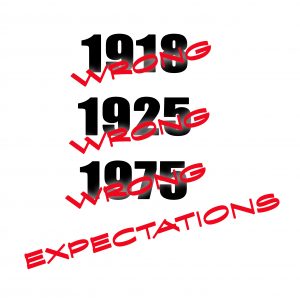 “Wrong expectations” sounds much nicer than “false prophecies.” Accordingly, the Watchtower often defends itself against a charge of being a false prophet by comparing itself with Bible prophets who had misunderstandings.
 As we examine the defenses the Watchtower makes against claims that it meets the Bible’s definition of a false prophet, let’s look at the one it uses most often.
